

The right customer persona interview questions tell you what a target customer actually does all day, what they are trying to get done, and what stops them from buying. Guessing at that information produces a persona nobody recognizes. Asking for it directly produces one your marketing can actually use.
I have built personas for real estate agents and home service owners who needed to know exactly who picks up the phone when a lead calls, and the pattern is always the same: the businesses with sharp messaging asked better questions of their own customers first. This article gives you the questions to ask, in the order to ask them, and what to do with the answers once you have them. If you want a deeper look at how a finished persona changes marketing decisions, I cover that in a companion piece on customer personas improving marketing decisions.
Good customer persona interview questions focus on real behavior and specific past decisions, not opinions or hypotheticals, because people are far more accurate describing what they already did than predicting what they would do. The questions below cover daily work, buying decisions, and trust, along with the interview technique that keeps answers honest and the method for turning those answers into a persona you can actually use in a marketing campaign.
Key Takeaways
- Ask about real, specific past behavior instead of hypothetical preferences to get answers you can trust.
- Separate the interview from the sales pitch so the target customer talks instead of you.
- Use the answers to build one working persona document, then test it against your next piece of marketing.
What Should You Ask About Daily Work, Goals, and Frustrations?
Start every persona interview with questions about a normal day before asking anything about your product or service. This gives you the context that makes every later answer make sense, and it builds the kind of trust that gets honest answers instead of polite ones.
Ask open-ended questions such as:
- “Walk me through what a typical day looks like for you.”
- “What are you trying to accomplish this month that you weren’t trying to accomplish a year ago?”
- “What’s the most frustrating part of your week, and how often does it come up?”
- “What takes up more of your time than it should?”
- “If you had an extra hour every day, what would you do with it?”
These persona questions surface buyer goals in the customer’s own words rather than the words you expect to hear. A homeowner describing why they put off calling a contractor for three weeks tells you more about buyer goals than any survey checkbox ever will.
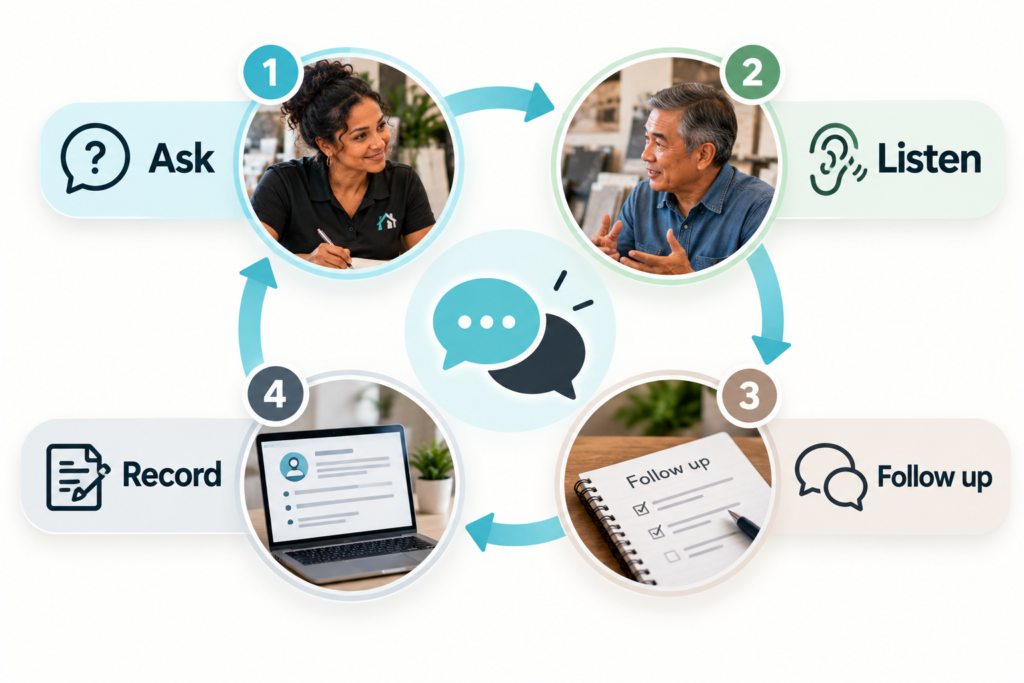
Resist the urge to summarize what you think they meant. Let the target audience finish their thought, then ask a follow-up like “what happened next?” The goal is customer insights grounded in a real story, not a general impression. If a service business owner tells you missed calls cost them real jobs, that detail belongs word for word in the persona, not paraphrased into something tidier.
What Should You Ask About Buying Decisions and Trust?
Ask about the last time the target customer actually bought something similar to what you sell, step by step, because that single story reveals more about their buying process than a dozen questions about preferences.
Useful buyer persona interview questions here include:
- “Tell me about the last time you hired someone or bought something in this category. What happened first?”
- “What made you start looking in the first place?”
- “Who else was involved in that decision?”
- “What almost stopped you from going through with it?”
- “What would have made you trust that company less?”
These questions map the full buying journey instead of just the final purchase. A buyer describing how they compared three contractors before calling one back tells you exactly where trust breaks down in their shopping preferences, and that detail feeds directly into lead generation messaging. If you learn that price came up only after a company failed to answer the phone quickly, that single fact changes how you prioritize response speed in your own marketing. For service businesses specifically, pairing this research with a clear look at the lead qualification process often reveals where buying decisions stall before a sale ever closes.
Ask about money directly but late in the conversation: “What did you end up paying, and did that feel fair looking back?” People answer this more honestly once rapport is built than they do in the first five minutes.
How Do You Get Useful Answers Without Leading the Interview?
Ask about what someone actually did, not what they think they would do, because self-reported predictions about future behavior are unreliable while stories about past behavior are not. This single shift separates a useful persona interview from one that just confirms what you already believed going in.
A few rules keep a persona interview honest:
- Avoid suggesting the answer. Instead of “was pricing the problem?” ask “what made you hesitate?”
- Use neutral words. “Frustration” and “problem” prime a negative answer before the person has said anything. “How does this fit into your week?” works better.
- Ask for the last specific example, not a general pattern. “Tell me about the last time” beats “do you usually.”
- Let silence sit. The first answer is rarely the complete one. A pause often pulls out the real reason.
- Listen more than you talk. A good persona interview runs mostly on the other person’s words, with you asking short follow-ups.
Market research built this way produces demographic questions and behavioral questions that actually connect to a buying decision, instead of data points that sound informative but explain nothing. Demographic questions like age, location, or household size matter less on their own than how they connect to a specific frustration or goal.
If you are running a persona survey instead of live interviews, keep the same rules. Buyer persona surveys that ask “would you pay more for faster service?” always get a yes and teach you nothing. Ask what they paid last time and how that decision got made instead. Plan on five to eight real conversations before you start seeing the same answers repeat; that repetition is the signal you have enough persona research to move forward.
How Do You Turn Interview Answers into a Persona You Can Use?
Build one buyer persona document from the patterns that repeat across interviews, not from any single conversation, because one customer’s story is an anecdote and five or more matching stories are a pattern you can act on.
A usable persona template includes:
- Name and role, kept simple and specific (not a cute nickname, an actual job description)
- Top goal, in the customer’s own words
- Top frustration, tied to a specific moment they described
- How they make the buying decision, including who else is involved
- What builds or breaks trust, pulled directly from their story about a past purchase
- Three to five direct quotes, used verbatim in your marketing copy later
This is how to create buyer personas that hold up under use instead of ones that read like a stock photo caption. A real estate agent persona built this way might read: “Sells 15 to 20 homes a year, answers her own phone between showings, loses patience with any system that feels like extra work.” That single sentence does more for a marketing strategy than a page of demographic charts.
Once the persona exists, test it against your next piece of content. If a marketing campaign built around that persona gets better replies than your last one, the persona is working. Customer profiles and audience segments built from real interviews tend to sharpen a content marketing strategy fast, because the headlines and offers start matching language the target customer already uses instead of language your team invented. That shift is also what tends to move customer retention and brand loyalty in the right direction, since customers respond better to messaging that sounds like something they would say themselves.
Ask About Real Decisions Before Writing Your Next Message
A persona built on five or more real interviews beats one built on internal guesses every time, because guesses tend to confirm what your team already believes instead of revealing what the target customer actually does. The questions in this article, daily work and goals, buying decisions and trust, and the follow-up technique that keeps answers honest, give you everything needed to run that first round of interviews this week.
Once the persona exists, the next test is whether it changes how you write. A missed call, a slow follow-up email, or a voicemail box that never gets checked all cost the same thing: a lead who already decided to buy from someone else. If your persona research keeps surfacing that exact frustration among your own customers, it is worth looking at what happens after a call goes unanswered. I cover that gap in detail in a piece on the opportunity cost of unanswered calls, and it pairs naturally with persona work since both start from the same question: what is the customer actually experiencing right before they decide to call someone else instead?
If you want help turning finished interview data into a persona document and a matching marketing strategy, DH Digital Consulting builds both as part of its customer persona service, starting at $197 per persona, alongside its EchoAssist AI receptionist work for service businesses.
Frequently Asked Questions
How many people should I interview to build a reliable persona?
Plan on five to eight interviews per customer type before patterns start repeating consistently. Fewer than five conversations usually is not enough to tell a real pattern apart from one person’s unusual story.
What is the difference between a buyer persona and a customer persona?
The terms are used interchangeably in most marketing contexts, both describing a profile built from research into a real target customer. Some teams use “buyer persona” to focus specifically on the purchase decision and “customer persona” to cover the full relationship, including use and retention.
Should I use a survey instead of live interviews?
Live interviews get deeper, more honest answers because you can ask follow-up questions in the moment. A persona survey works as a faster way to confirm patterns across a larger group once live interviews have already told you what to ask about.
How long should a persona interview last?
Thirty to forty-five minutes is enough time to cover daily work, a buying story, and trust questions without losing the person’s attention. Shorter interviews tend to skip the follow-up questions that produce the most useful answers.
What if two customers give me completely different answers?
Different answers usually mean you have two separate personas, not one confused one. Split the group and build a second persona rather than averaging the answers into something that fits neither customer.