
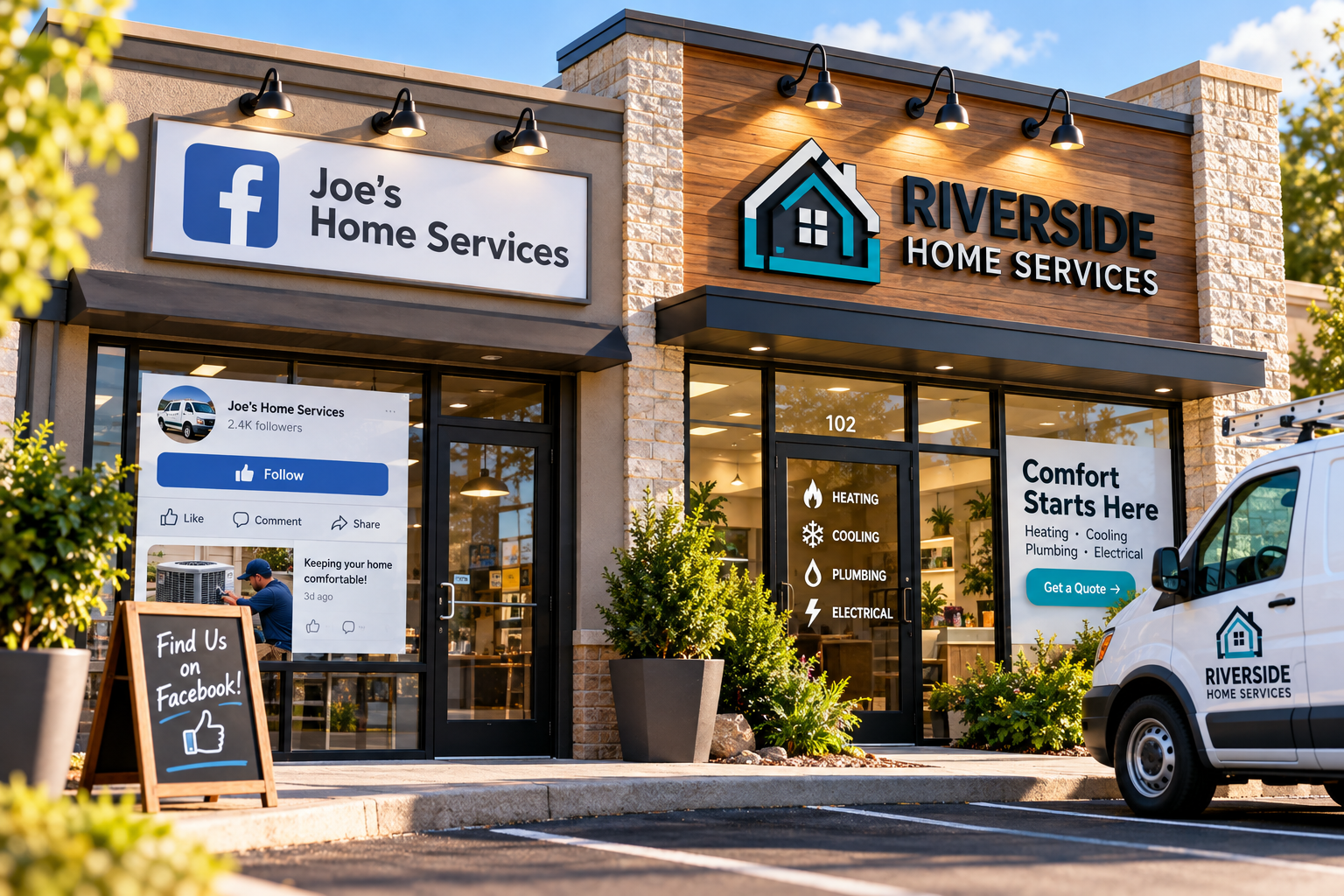
Yes, most service businesses need a website, and the reason comes down to one simple fact: when someone hears about your business, Google is the first place they check. If nothing comes up, or if the only thing they find is a social media page, they start to wonder whether you’re still in business or worth trusting.
I work with real estate agents and home-service business owners every day at DH Digital Consulting, and the pattern is consistent. The businesses that win more jobs are the ones a stranger can find, understand, and contact in under a minute. A website does that job around the clock, even when you’re on a job site, in a showing, or off the clock for the night.
A website is worth building for almost any service business because it is the one online asset you fully control, it shows up in Google search when people look for what you do, and it gives potential customers a place to decide you’re worth calling. Social media accounts and directory listings help, but a platform can change its rules or limit your reach at any time. A website stays yours.
Key Takeaways
- A website builds trust and gets you found in Google search results, even for people who heard about you by word of mouth.
- Social media and booking apps are useful tools, but neither one replaces what a website does for lead generation and credibility.
- You can start small, a single well-built page with your services and contact information is enough to launch, then grow it over time.
What Does a Website Do for a Service Business?
A website gives your business a professional home online that works for you whether you’re available or not. It’s where a potential customer goes to confirm you’re legitimate, see what you offer, and decide whether to reach out.
The benefits of having a website go beyond having a digital brochure. A professional website builds brand identity through consistent colors, messaging, and photos of your actual work. It builds brand awareness by giving people something to share and reference when they recommend you to a friend. It also strengthens customer service, since a clear FAQ page or service description answers common questions before a customer ever has to ask.
Here’s what a website handles that other channels don’t:
- States your hours, service area, and pricing structure clearly
- Shows your target audience exactly what problems you solve
- Hosts reviews and project photos in one organized place
- Gives you a page that works even when your phone doesn’t ring through
Think of your online presence like a storefront. A Facebook page is a flyer taped to someone else’s bulletin board. A website is the building with your name on the door, open to anyone who walks by, day or night. If a customer is comparing you to three competitors, the one with a clear, professional site usually gets the call first, simply because it looks like the safer choice. For a deeper look at how missed opportunities compound for service businesses, see how missed calls cost service businesses in lost revenue over time.
How Can a Website Help Turn Interest into Leads?
A website turns casual interest into real leads by giving visitors a clear next step instead of leaving them to figure it out on their own. Lead generation happens when a visitor takes an action, calling, filling out a form, or booking a consultation, and a website is built to prompt that action at the right moment.
A dedicated landing page built around one service, like water heater repair or home staging consultations, converts better than a crowded homepage trying to speak to everyone. Search engine optimization, often shortened to SEO, is what gets that landing page in front of people in the first place. When your pages are built around the terms your customers actually type into a google search, like “emergency plumber in Plano,” you start earning organic traffic instead of paying for every visitor through ads.
A few basics make this work:
- Build a page around one service and one clear call to action.
- Add real photos, pricing ranges, and service area details.
- Track performance through Google Analytics so you know which pages bring in leads.
- Build backlinks from local directories and partner sites to strengthen your ranking in search engine results pages.
- Capture emails for email marketing follow-up when a visitor isn’t ready to call yet.
None of this fixes a slow follow-up process on the back end. If leads come in but nobody answers the phone or responds in time, the website did its job and the business still loses the sale. That gap is worth addressing directly; read more in website cannot fix broken lead response and lead response first five minutes.
Can Social Media or a Booking Page Replace a Website?
Social media and booking pages cannot fully replace a small business website, because neither one is built to answer every question a buyer has before they decide to hire you. Instagram and Facebook are good for staying visible and sharing updates, but the platform owns the audience, not you. If the algorithm changes or an account gets suspended, that visibility disappears overnight.
A booking page alone also falls short. It handles scheduling well, but it rarely explains your services, shows your work, or builds the kind of trust a stranger needs before committing. A personal website or an online portfolio fills that gap by giving a visitor the full picture: who you are, what you’ve done, and proof that you deliver.
The strongest setup pairs both. Use social media to stay top of mind and drive people toward your site. Use the website as the place where someone actually makes the decision to contact you. A one-page site with your services, service area, and contact details beats relying on a social profile alone, because it’s the only piece of this puzzle that shows up when someone searches Google directly for what you offer. Building out that qualifying step matters too; see the lead qualification process service business guide for how to turn an inquiry into a real appointment.

What Kind of Website Should You Build First?
Start with a simple, one-page or few-page site built around your services and a clear way to contact you, not a large, feature-heavy build you’ll never finish. The goal at the start is to get something live, not perfect.
A website builder is the fastest way to launch for most service businesses. Platforms like Wix handle hosting, templates, and basic SEO tools in one package, which works well if you want to be live within a few days. WordPress offers more flexibility and control over SEO long term, but it takes more setup, including connecting a hosting provider separately.
Before you build, you’ll need a domain name. Run a domain name search early, since good names get taken quickly, and try to keep it short, easy to spell, and close to your business name. Once you have a domain, you’ll need web hosting, which some website builders bundle in automatically and others require you to set up separately.
If you plan to sell physical products in addition to offering services, an ecommerce website adds an online store or online shop function on top of your core pages. Most service businesses don’t need this at launch. A homepage, a services page, and a contact page cover the basics. Add complexity later as your business grows, not before.
Start with a Site That Helps Customers Take the Next Step
A website works best when it’s built around one goal: giving a visitor a clear reason to contact you and an easy way to do it. Start small, with a homepage, a services page, and a contact method that’s hard to miss.
Getting found is only half the job. Once a lead comes in, how fast and how well you respond decides whether it turns into paying work. That’s the real gap for a lot of agents and home-service owners: you’re out doing the job that earns the money, which is exactly why the next call sometimes goes unanswered. EchoAssist answers calls around the clock, qualifies the lead using questions built around your actual business, and sends you a summary so you never lose track of who called or why. If you want to see how that fits alongside your website, book a free 10-minute demo and I’ll walk you through it.
Building the site itself doesn’t have to be a mystery either. If you’re weighing your options on cost and platform, the small business website cost breakdown is a useful next stop before you commit to a build.
Frequently Asked Questions
Do I need a website if my business runs mostly on referrals?
Yes, because people who get referred to you still look you up before calling. A referral without a website to confirm you’re legitimate can go cold the moment someone searches your name and finds nothing. A simple site closes that gap and makes the referral easier to act on.
Is a Google Business Profile enough instead of a full website?
A Google Business Profile helps you show up on Maps and in local search results, but it isn’t a replacement for a website. It works best paired with a site that gives more detail on your services, pricing, and service area. Think of the profile as your listing and the website as the place that backs it up.
How much website do I need to get started?
Less than most people expect. A single homepage that states what you do, who you serve, and how to reach you covers the basics for most service businesses. You can add more pages, like a blog or booking tool, as your needs grow.
Will a website alone bring in more customers?
A website makes you findable and builds trust, but it won’t fix slow response times once leads start coming in. If calls go unanswered or emails sit for days, the lead you worked to attract can go to a competitor instead.