
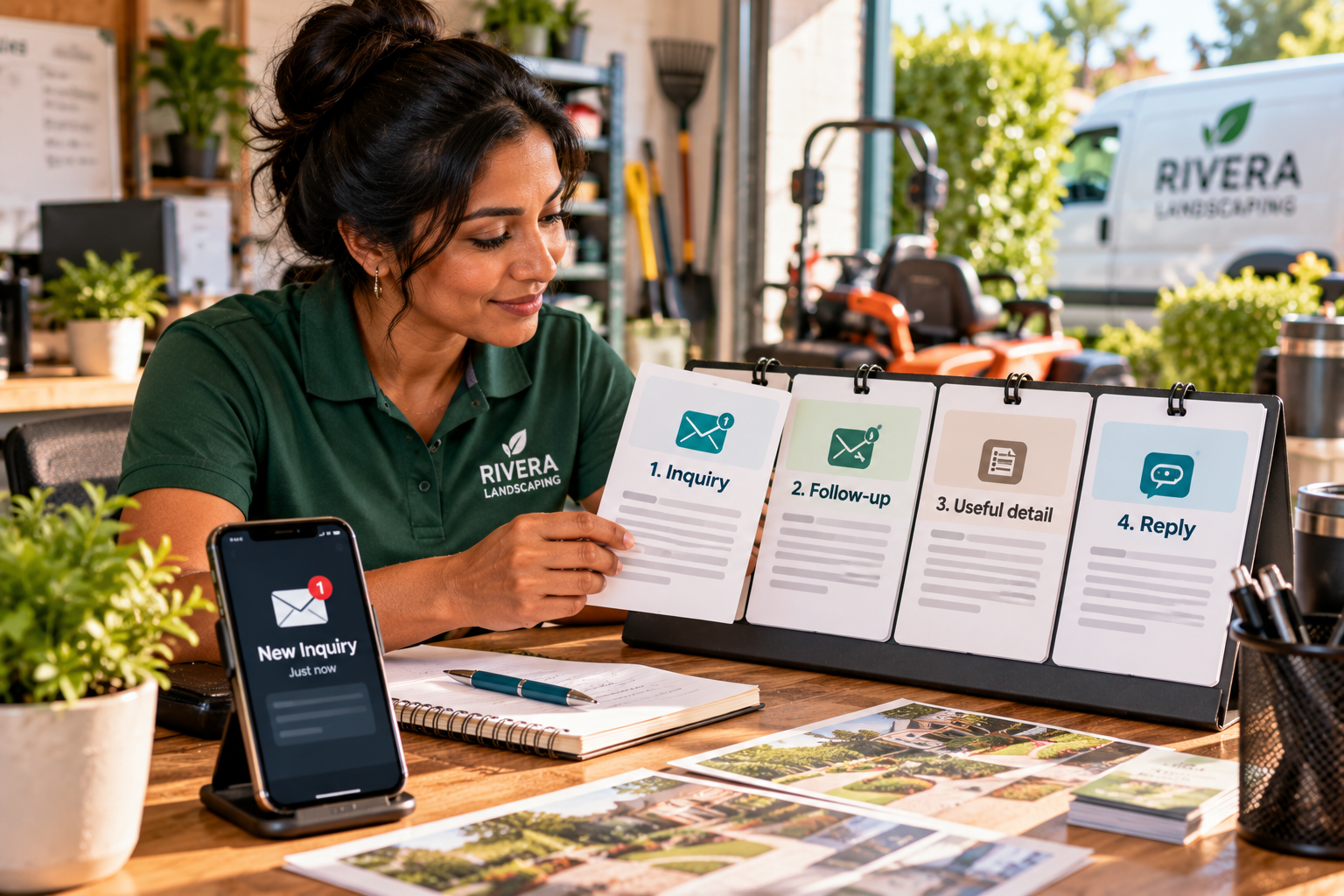
Good email sequence examples follow a pattern you can copy: one email that delivers what you promised, a few that build trust, and one that makes a clear ask. Service businesses lose leads every day because the follow-up never happens or happens too late, and the fix is usually a written sequence, not more hustle.
I work with real estate agents and home-service owners through DH Digital Consulting, and the missed-call problem and the missed-email problem come from the same root cause: the owner is out doing the work that pays the bills, not sitting at a desk answering messages. A written sequence solves that because it runs whether you’re at a job site or a showing. A welcome sequence of 3 to 4 emails sent over the first 1 to 2 weeks after someone opts in converts better than a single thank-you email, because it delivers the promised resource, builds trust, and asks for one small next step instead of all at once.
The examples below cover new leads, existing customers, and the automation and tracking that keep sequences running without your daily attention.
Key Takeaways
- A short sequence of 3 to 7 emails, each with one job, outperforms a single follow-up message for turning leads into booked work.
- Behavioral triggers, like a form fill or an abandoned booking, produce better open and reply rates than a fixed weekly blast.
- Reply rate, click-through rate, and bounce rate together tell you whether a sequence is working, not opens alone.
Welcome, Nurture, and Follow-Up Examples for New Leads
A welcome email sequence should thank the person, deliver what they signed up for, and set expectations for what comes next, all within the first email. Here’s a short example for a service business that just captured a lead magnet download, like a pricing guide or a seasonal checklist:
Email 1 (sent immediately): Thanks the lead by name, delivers the download link, and states one next step (“reply with your city and I’ll send our service area map”).
Email 2 (day 3): Shares a short case example or before-and-after photo set that shows the kind of work you do.
Email 3 (day 7): Answers the most common objection you hear on calls, directly, in plain language.
Email 4 (day 10): Makes a clear, low-pressure ask: book a call, request a quote, or reply with a question.
That four-email arc is a basic lead nurturing email sequence. The goal is not to sell in every message. It’s to prove you’re worth replying to before you ask for anything. For leads who came from a missed phone call rather than a web form, the follow-up email sequence needs to move faster since the person already showed urgency; see email follow up missed call for how timing changes the structure.
Once a lead responds or shows buying signals, a sales email sequence takes over with sharper email copy: a direct recap of what they need, a specific price range or next step, and a deadline-free but clear call to action. If your leads are coming from calls you can’t always answer, pairing that sequence with a written response plan matters just as much as the words in the message; see lead response first five minutes for how fast that first reply needs to be.
Onboarding, Re-Engagement, and Purchase Examples
An onboarding email sequence walks a new customer through their first weeks with you so they know what to expect and don’t call support with questions you could have answered up front. A typical onboarding sequence for a service business runs 3 to 5 emails over two to four weeks: a welcome and expectations email, a “what happens next” email explaining your process, a reminder about their appointment or service date, and a check-in after the job is done.
For businesses with repeat service needs, a few other sequence types fill specific gaps:
- Re-engagement email sequence: targets customers who haven’t booked in 6 to 12 months. A simple “still need this done?” message with a direct reply option often works better than a discount.
- Abandoned cart email sequence: applies to any business with online booking or quote tools. If someone starts a booking form and doesn’t finish, a reminder within a few hours, while their intent is still fresh, recovers a meaningful share of those drop-offs.
- Upsell email sequence: offers an adjacent service to a customer who already trusts you, timed after a completed job rather than during it.
All three support customer retention, which costs less to maintain than constantly generating new leads. If your current process still relies on checking a crowded inbox or a voicemail box to catch these moments, that gap is worth closing; see voicemail is not a lead response strategy for why that habit lets repeat business slip through.
How Do You Set Up a Sequence That Responds to the Right Action?
Set up email automation so each message fires based on what the person actually does, not a fixed calendar date. A behavioral trigger, like filling out a form, clicking a specific link, or abandoning a booking, tells you where someone stands in the customer journey far better than a generic weekly send.
Most email platforms let you combine both approaches. A welcome sequence might use time-based email sequences for the first few messages (day 0, day 3, day 7) and then switch to behavioral triggers afterward: if the person clicks your pricing link, they get a sales-focused follow-up; if they don’t, they get another educational email instead.
To build this without starting from scratch, most marketing automation tools include email sequence templates for the common categories: welcome, onboarding, abandoned cart, and re-engagement. Start with a template, then adjust the wording to match how you actually talk to customers. A sequence that sounds like a corporate newsletter instead of the business owner the customer called will get ignored.
Behavioral triggers paired with a short time-based cadence produce the most relevant sequence, because they respond to what a lead actually does instead of guessing based on the calendar.
Before building sequences for every scenario, figure out which one actually needs automation first. Jumping straight to referral emails or re-engagement campaigns before your core lead-qualification sequence is solid wastes effort; see what to automate first for a way to prioritize that decision, and lead qualification process service business for how qualification questions shape what the first email should even say.

How Can You Tell Whether Your Emails Are Working?
Track reply rate and click-through rate first, because they show whether people are engaging with your message, not just opening it. Open rates get inflated by image-blocking and privacy settings on most email clients, so they’re the least reliable signal on their own.
Here’s what each metric tells you:
| Metric | What it tells you |
|---|---|
| Reply rate | Whether the message prompted a real response |
| Click-through rate | Whether the content or offer was compelling enough to act on |
| Conversion rate | Whether the sequence led to a booking, purchase, or signed job |
| Bounce rate | Whether your list quality or sending reputation needs attention |
| Email deliverability | Whether your messages are reaching the inbox at all |
A high bounce rate or poor email deliverability will quietly sabotage a well-written sequence before a single person reads it. Clean your list periodically and remove addresses that bounce.
A/B testing one variable at a time, a subject line, a CTA phrase, or a send time, tells you what to change next. Test for a couple of weeks before drawing conclusions; small lists need more time to produce a reliable signal. Connect email results to the business outcome you actually care about, whether that’s booked calls or signed jobs, not just clicks.
Start with the Follow-Up Your Leads Need Most
Most service businesses don’t need all five sequence types running on day one. Start with whichever moment is currently costing you the most leads: a welcome sequence if new leads go cold after the first reply, or a follow-up sequence if calls and web forms sit unanswered for hours. Building one sequence well and watching how it performs teaches you more than launching five half-finished ones at once.
If missed calls are the bigger leak in your business, a written email sequence can only do part of the job. EchoAssist answers calls live, around the clock, so the lead gets a response before they call the next business on their list. Pricing starts at $497 a month with a one-time $397 setup fee, and the first 10 clients can lock in a founding rate of $297 a month for a full year in exchange for a testimonial. A free 10-minute demo shows how it would handle your actual call volume; book one through EchoAssist or reach the team directly at (469) 689-1107.
Frequently Asked Questions
What’s the difference between a drip campaign and an email sequence?
A drip campaign sends emails on a fixed schedule regardless of what the recipient does, while an email sequence adapts based on behavior, like whether someone clicked a link or abandoned a form. Both fall under the broader practice of email sequencing, but a sequence usually produces better engagement because the content matches what the person actually did.
How many emails should a welcome sequence include?
Most welcome sequences run 3 to 4 emails over the first one to two weeks. That’s enough to deliver your promised content, build some trust, and make one clear ask without overwhelming a new subscriber.
How long should I wait before sending an abandoned cart or abandoned booking email?
Send the first reminder within a few hours, while the person’s interest is still fresh. A second email one to three days later and a final one within a week usually covers the recovery window.
Do I need special software to run an email sequence?
Most small and mid-size email platforms include built-in automation for triggers, timing, and conditional sends, so a dedicated developer isn’t necessary. Look for a platform with list segmentation and reporting on reply and click-through rates so you can see what’s actually working.
Should every sequence end with a sales pitch?
No. Some sequences, especially early nurture emails, are meant to build trust and answer objections, not close a sale. Save the direct ask for the email where the reader has had enough context to say yes with confidence.